Oven-to-Air-Fryer Conversion: Guide to Master Timing and Crispiness

When you want crispy results fast, the air fryer is your go-to. Because an air fryer’s smaller chamber and rapid fan circulate heat more efficiently, food cooks faster and turns out crispier while using less oil. Once you know the basics of oven-to-air-fryer conversion, it’s easy to adapt your favorite oven recipes to take advantage of the air fryer's benefits.
This guide explains how to adjust temperature, time and techniques so every air-fried meal turns out perfectly.
How to calculate conventional oven-to-air-fryer conversion
Converting oven recipes for the air fryer is simple. Just adjust the temperature and cooking time to match the air fryer’s faster, more efficient heat circulation.
Temperature adjustment
The rule of thumb is to lower the temperature by 25°F to 50°F when converting an oven recipe to the air fryer. This is because the air fryer’s concentrated heat can cause the outside to brown before the inside is fully cooked. For example, if your oven recipe calls for 400°F, try 375°F or even 350°F in the air fryer for crispy results.
Time adjustment
Plan to reduce oven cooking time by about 20% to 25%, depending on the recipe. Less cooking time is required due to the fast heat transfer that cooks food from the inside out, locking in moisture while crisping the surface. So, if your oven recipe calls for 40 minutes in the oven, it will likely be done in around 30 to 32 minutes in the air fryer.
Oven-to-air-fryer conversion chart (printable)
Use this quick oven-to-air-fryer conversion chart to guide your temperature and time adjustments. It covers common settings so you can adapt recipes at a glance — no math required.
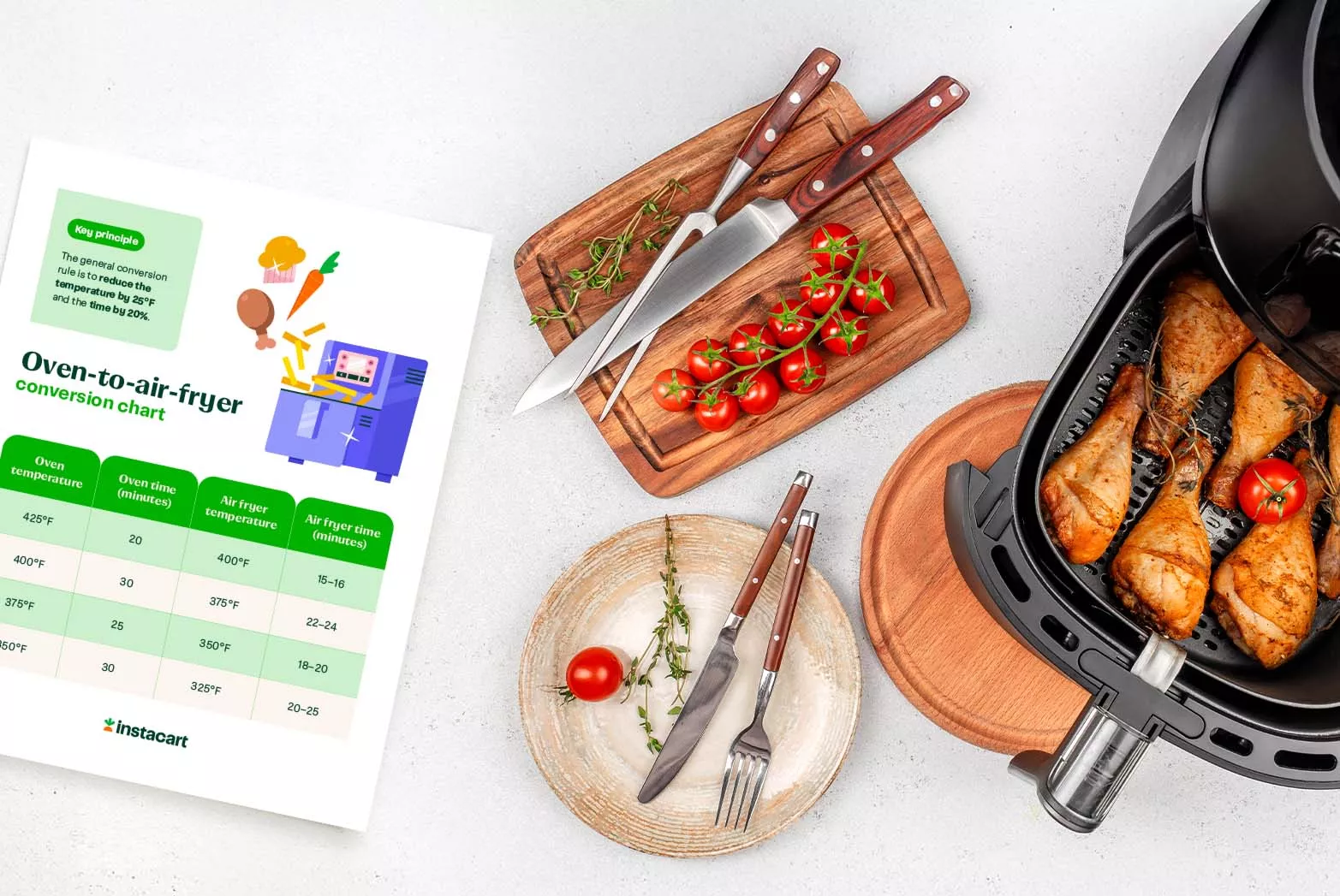
Download oven-to-air-frier conversion chart
Conversion by food category
Not all categories of foods cook the same way in an air fryer. Use these conventional oven-to-air-fryer conversion tips to achieve the best results.

Frozen foods
For most frozen foods, you can reduce the cooking time by 30% to 50%, but keep the same temperature you’d use in the oven. Frozen foods need high heat to crisp up quickly in the air fryer.
For example, if the oven instructions for your favorite frozen french fries say to cook at 425°F for 20 minutes, air-fry at 400°F for 10-12 minutes, shaking halfway.
Try air-frying other staples like chicken nuggets or mozzarella sticks for crispy results in less time. There’s no need to thaw — just cook in a single layer to help each piece brown evenly.
Meats and poultry
When cooking meats or poultry, lower the temperature by 25°F from the oven setting. For example, if you're following a chicken recipe that says to cook at 400°F for 25 minutes, air-fry at 375°F for 18-20 minutes.
For thicker cuts of chicken breasts and pork chops, you may need to add a few minutes to ensure the center cooks through. Always use a meat thermometer to check for doneness, and flip pieces halfway through for even browning.
Baked goods
For delicate items like cookies or muffins, reduce the temperature by about 50°F to prevent the outside from browning before the center is cooked through, and cut the baking time by roughly 20%.
So, if you're whipping up a batch of your favorite chocolate chip cookies and the recipe calls for baking at 350°F for 12 minutes, try air-frying at 300°F for eight to nine minutes.
Use small, air fryer-safe pans and avoid sticking by lining your pans with muffin liners or air fryer parchment paper. Check doneness with a toothpick before removing.
Vegetables
When air-frying vegetables, lower the temperature by 25°F and reduce the cooking time by roughly 20% from the oven setting. For example, for roasted potatoes, if the recipe indicates 425°F for 30 minutes, air-fry at 400°F for 18-20 minutes.
Toss your veggies with a light, high-smoke-point oil, like avocado oil, and your favorite seasonings before cooking. Shake the basket every few minutes to help the pieces brown evenly and get crisp.
Air fryer conversion tips
An air fryer is a versatile appliance that uses fast-moving hot air to cook food evenly and create a crisp texture with less oil. Because of this concentrated heat, there are some key differences from cooking in a traditional oven. Keep the following tips in mind when converting recipes:
Preheat the basket: While the air fryer heats up fast, preheating for three to five minutes helps ensure accurate cooking times and consistent results.
Shake regularly: For small items like fries, wings or vegetables, shake the basket every five to seven minutes. It’s the air fryer’s version of flipping food in the oven.
Avoid overcrowding: Cook in a single layer so hot air can circulate. Stacking food leads to uneven cooking and soggy spots.
Use a light coating of oil: Toss vegetables or proteins with a small amount of oil for better browning, but avoid aerosol sprays that can damage nonstick surfaces.
Check for doneness early: Air fryers vary in size and power. Start checking a few minutes before your adjusted cooking time, then note what works best for your model.
Oven-to-air-fryer conversion troubleshooting
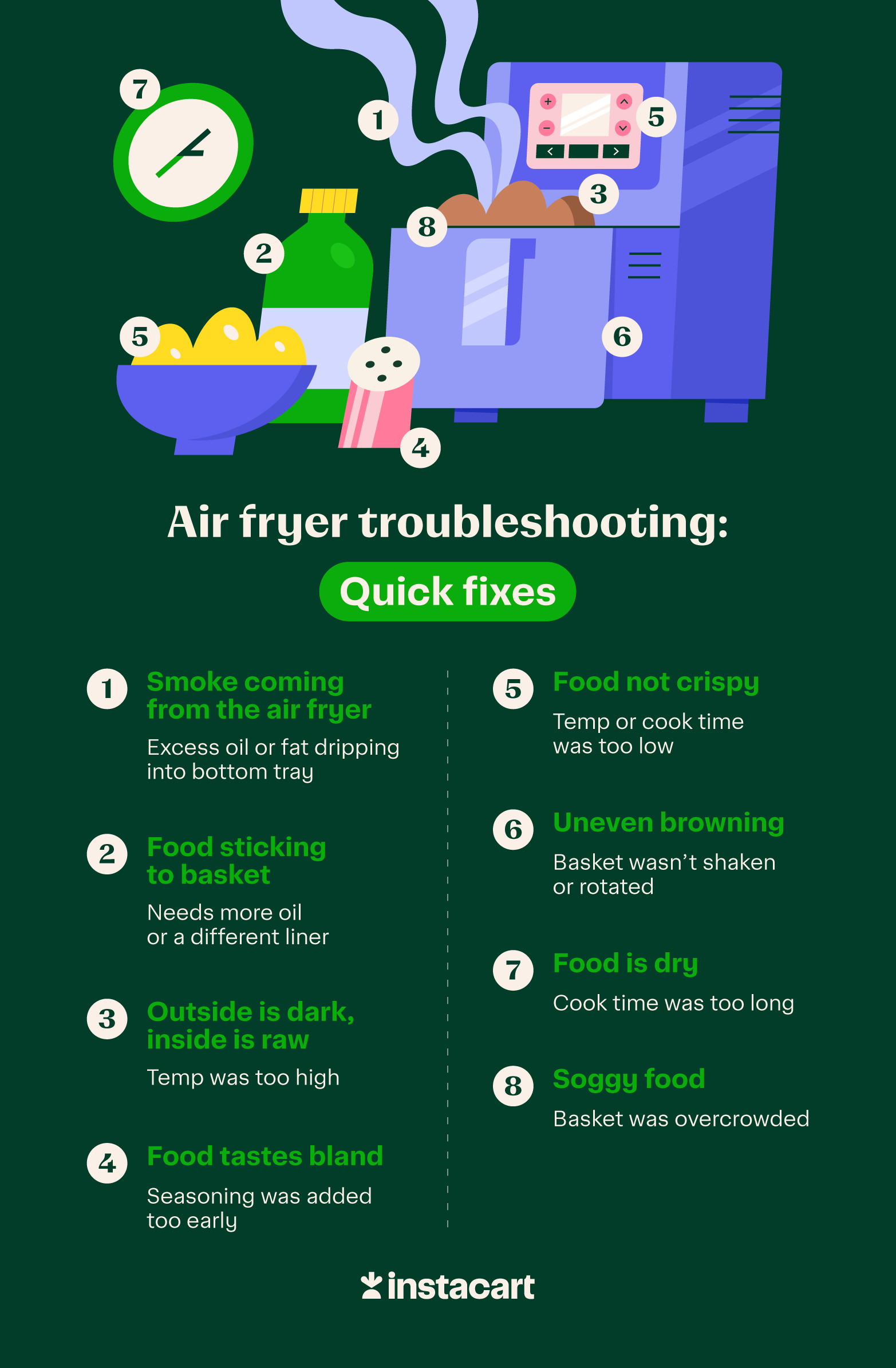
While learning how to use an air fryer is relatively easy, novice users may encounter problems at first. Here’s how to fix the most common issues so your meals turn out crisp, evenly cooked and delicious every time:
Food is dry: The cooking time was too long. Start with a 30% time reduction next time, and check for doneness a few minutes early.
Outside is dark, inside is raw: The temperature was too high. Lower it by another 25°F to help food cook evenly from the inside out.
Soggy results: The basket was overcrowded. Cook in smaller batches and shake the basket halfway through for better airflow.
Food sticks to the basket: You didn’t add enough oil or use the right liner. Lightly coat food with oil or use air fryer-safe parchment paper to prevent sticking and make cleanup easier.
Uneven browning: The basket wasn’t shaken or rotated. Pause halfway through cooking to shake or turn food so hot air reaches every side.
Smoke coming from the air fryer: Excess oil or fat likely dripped into the bottom tray. Wipe it out between batches and avoid cooking fatty foods at very high temperatures.
Food isn’t crispy enough: The temperature or time was too low. Add a few extra minutes or increase the heat slightly for the next batch to reach your desired texture.
Food tastes bland: Seasoning was added too early and blew off during cooking. Toss food with spices or sauces after air-frying for stronger flavor.
Speed up meal prep with Instacart
Once you’ve mastered oven-to-air-fryer conversion, you’ll spend less time cooking and more time enjoying your meals. You may also want to try your hand at a few delicious recipes developed for air fryers.
Air fryers make weeknight dinners faster and cleanup easier, while Instacart helps streamline the rest — with no extra trips to the grocery store. Order everything you need, from olive oil spray to fresh vegetables, and have it delivered right to your door.
Oven-to-air-fryer conversion FAQ
Here are a few quick answers to common questions about converting oven recipes for the air fryer.
Why do I need to reduce the temperature when using the air fryer?
The air fryer’s smaller chamber and powerful fan create more concentrated heat than a traditional oven. Reducing the temperature by 25°F to 50°F helps prevent the outside from overbrowning before the inside is fully cooked.
Should I thaw frozen food before air-frying it?
No thawing is needed. Air fryers are designed to cook frozen foods quickly and evenly. Just reduce the time by 30% to 50% and cook in a single layer for the best results.
How do I handle baked goods in the air fryer?
Use a lower temperature and shorter baking time to keep the centers of your cookies and muffins soft and the edges golden. Reduce the oven temperature by about 50°F and the bake time by 20%, then check for doneness with a toothpick.

Mel Hull
Author
Mel is a seasoned content strategist and food writer with over a decade of experience helping brands tell compelling stories. Inspired by her hometown of Houston, TX, she brings her love of bold flavors and Southern hospitality to the table. In the kitchen, she loves baking (especially banana bread!) and experimenting with Tex-Mex dishes.

Heather Matley
Editor
Heather Matley is an editor at Instacart whose passion for food and cooking has inspired her work on everything from grocery guides to recipe development. With over eight years of experience in editing, content creation, and search engine optimization, she strives to empower readers with the most effective tools, guides, and ideas to transform their home cooking.

Instacart Recommends
View most recent posts →